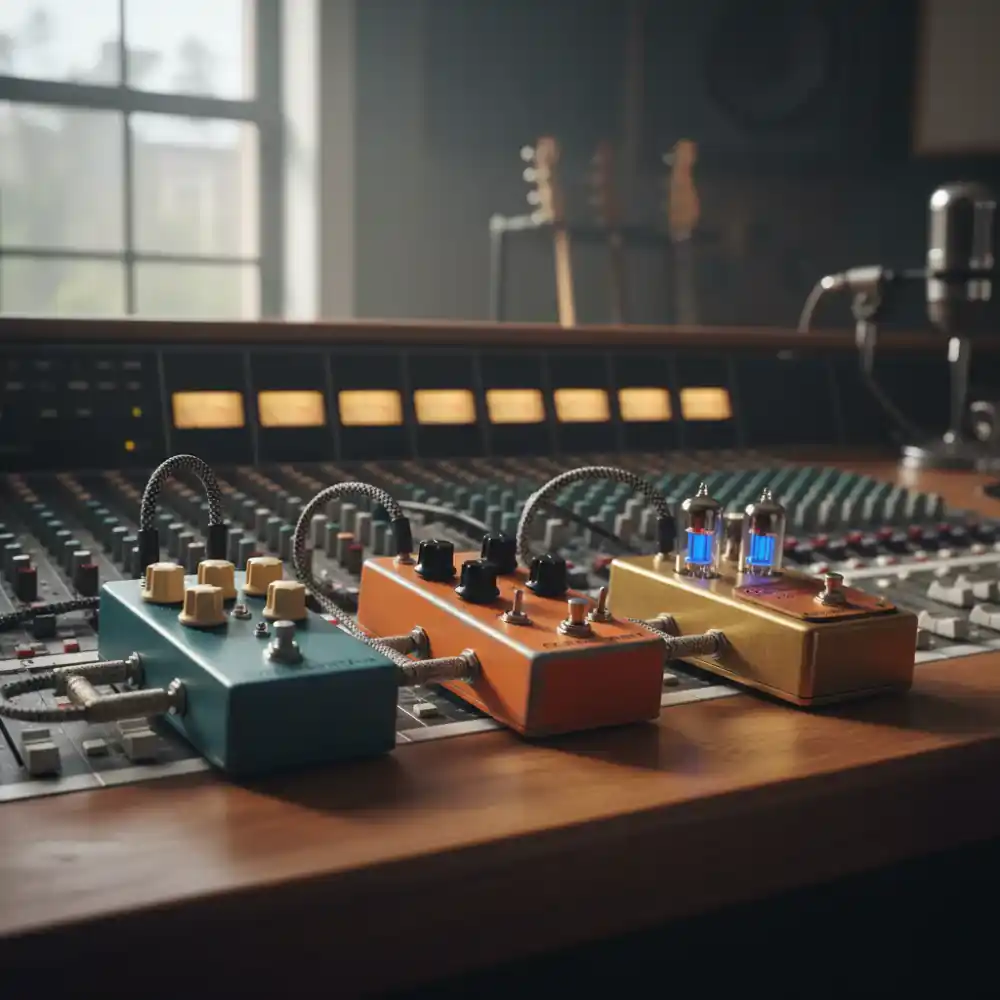
Inside the workshop

Studio Stories & Tone Notes

Follow real builds from the Cardiff bench to the live room. Circuit sketches, mic placements, pedal chains and the tiny decisions that shape a finished sound.

Browse latest stories
New builds added every few weeks
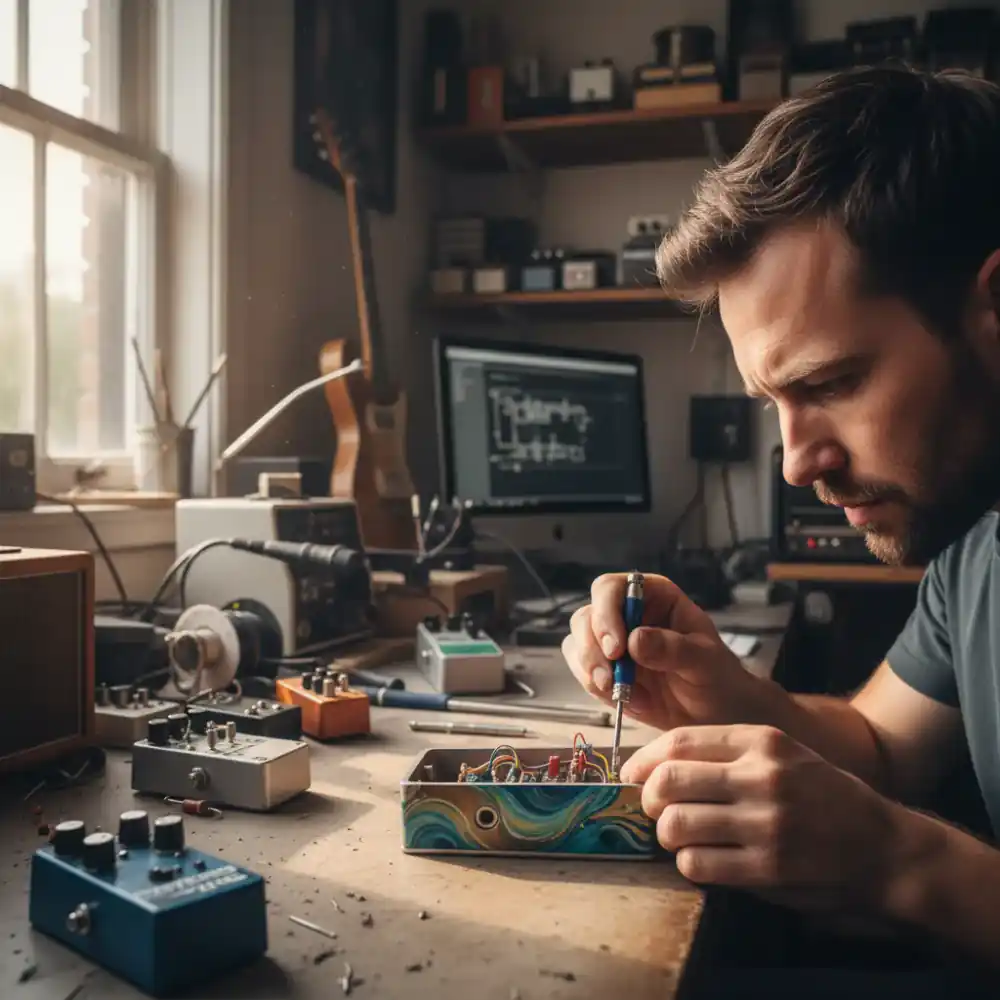
Pedal builder adjusting a custom guitar pedal on a studio desk
From the bench Custom circuits, failures and fixes
In the room How pedals behave under mics

Feature build diary

The Cardiff Hollow Drive: From scribble to stage

A low-gain drive tuned for semi-hollow guitars and smaller UK stages, built for a local player who wanted edge-of-breakup at rehearsal volume.

Brief: Keep the amp clean, add just enough hair for jazz-influenced rock, and avoid the harsh top end that can jump out on bright semi-hollows. The rig: a 335-style guitar into a handwired 20W combo.

Circuit shape: Based loosely on a soft-clipping overdrive with a tightened low end and a slightly asymmetric clipping stage. We pushed the midrange centre down a touch to keep the neck pickup woody, not boxy.

Session notes: On the first studio pass we found the pick attack a bit glassy under close mics. A small tweak to the input filter and a resistor swap in the tone stack gave us a smoother transient without losing definition in the mix.

Takeaway: if a pedal feels perfect in the room but aggressive under microphones, look at the very first and very last filters before you blame the core clipping stage.
Session settings
Studio A – Cardiff
Gain
9 o'clock
Tone
11 o'clock
Level
Unity + 2dB
Placed
Before reverb
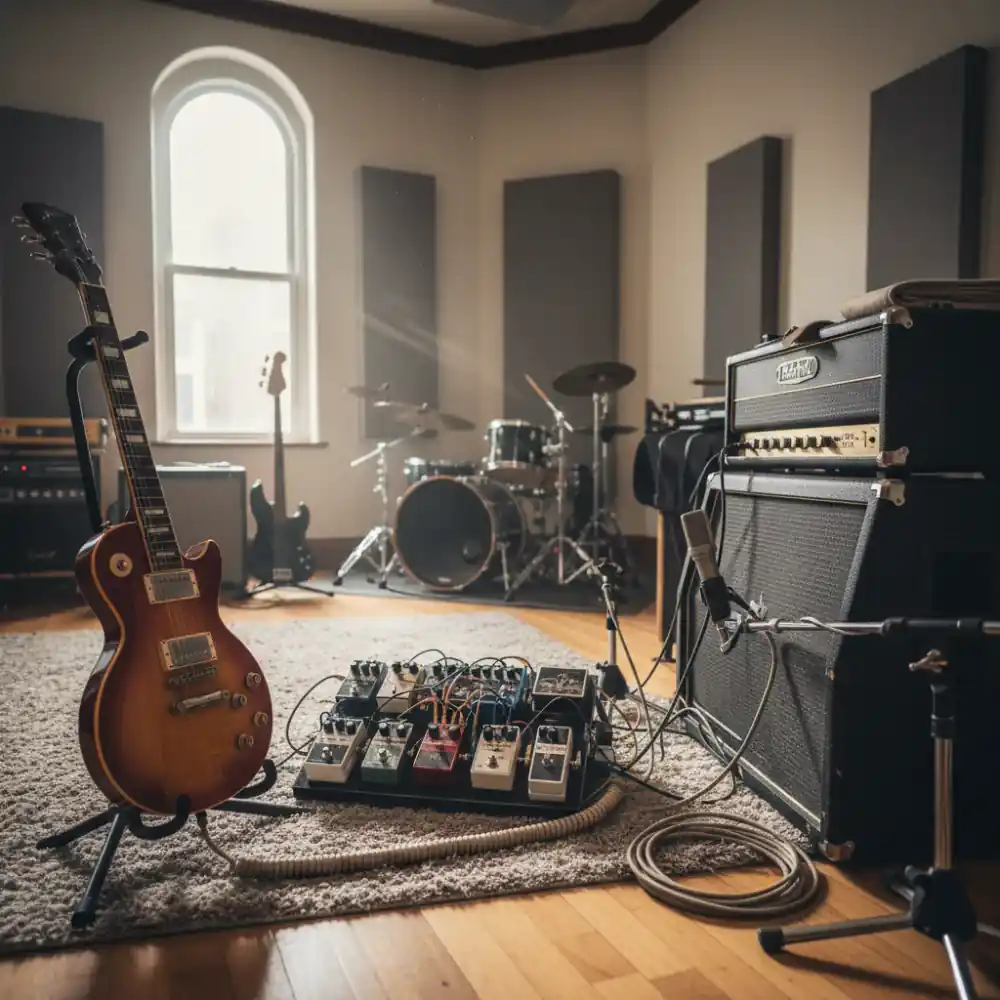
Guitar and pedalboard setup in a recording studio live room

Build timeline

From idea to first gig in four short passes

Most of our custom work follows a predictable rhythm. Here is how a typical commission moves from sketch to your first show.

  1. 01

    Tone brief & reference tracks

    We talk through your rig, rooms and volume limits, then listen to two or three reference recordings. That gives us a picture of how much compression, midrange and attack you actually use.

  2. 02

    Bench prototype & dry tests

    We build a first prototype and run it against test amps at band volume. This is where we decide on headroom, clipping style and EQ sweep before any studio mics get involved.

  3. 03

    Studio pass & mix tweaks

    We capture clean and effected takes into a DAW, then shift the pedal slightly brighter or darker so it holds its place once drums, bass and vocals are present.

  4. 04

    Road test & final notes

    You take the pedal to rehearsal or a show and send us notes. If a minor tweak would make it perfect, we dial it in and document your final settings in a tone card.

Rig notebooks

Snapshots from recent sessions

A cross-section of different players we have worked with recently – from compact pub rigs to more elaborate studio chains.

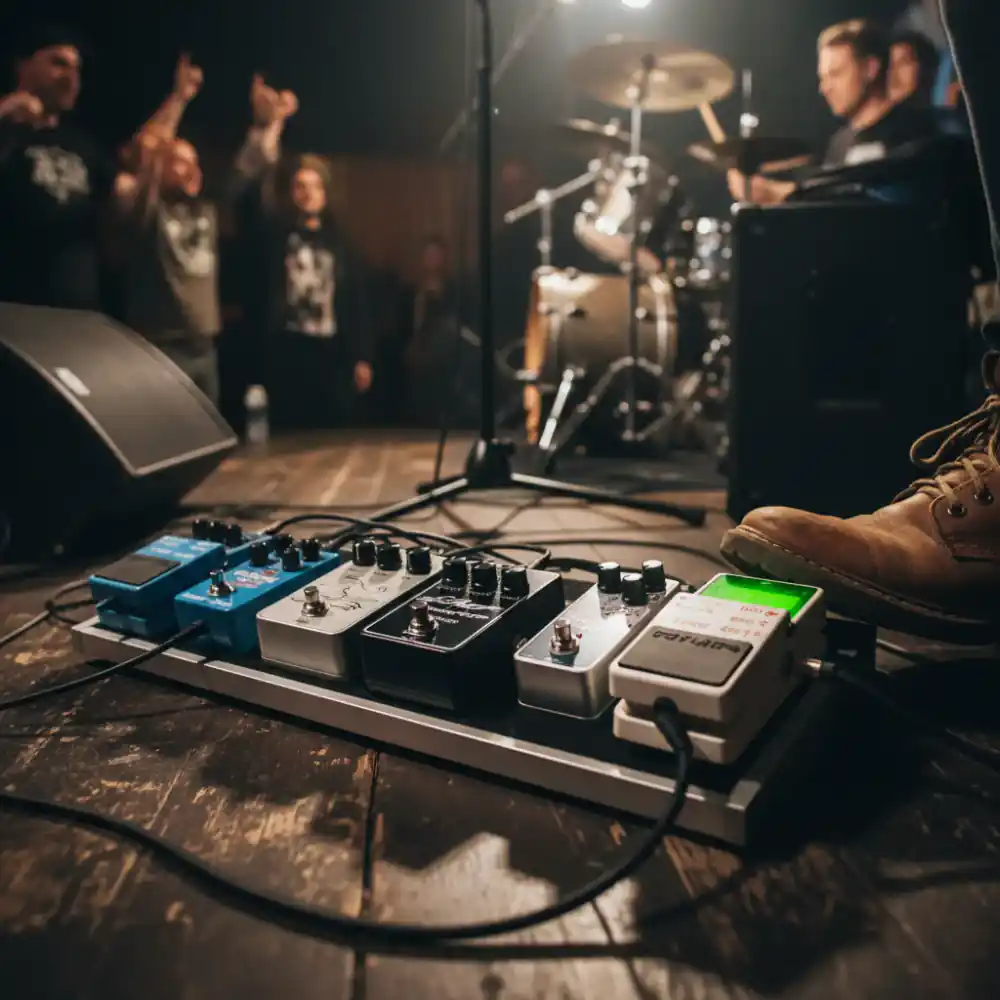
Guitarist using a compact pedalboard at a small venue
Friday residency Indie / alt

Cardiff pub board: making three pedals feel like ten

A guitarist running a Tele into a solid-state combo wanted one board that covered jangly verses, tight choruses and a slightly broken-up lead tone at neighbour-friendly volume.

  • Low-gain drive set just above clean, always on.
  • Short plate-style reverb tuned to the room, not the recording.
  • One dual-voice boost to cover both solos and sparkle.
Studio overdubs Session player

Layered ambient drive without washing out the vocal

We paired a mid-gain drive with a subtle modulated delay, then carved a notch around the singer's main range so stacked guitars stayed expansive but never crowded the melody.

Re-amp session Home recordings

Turning a direct guitar track into a convincing "amp in a room"

Using a custom preamp pedal into a clean head and a single dynamic mic, we built a flexible chain that could move from tight rhythm to saturated leads without changing the core tone too far.

Close-up of custom guitar pedals on a studio console

Practical tone notes

Small adjustments that make a big difference

Some of the most useful changes are simple ones. These are patterns we see often in the studio and in rehearsal rooms.

Use your volume control again

If your guitar volume knob feels like an on/off switch, your first gain stage may be too hot. A slightly lower input gain or a mild pre-gain high-pass can bring back the useful "in between" settings.

Studio note: we often set the loudest rhythm sound with the guitar at 8, not 10.

Pick attack vs. EQ

If a sound feels harsh, the instinct is to turn the tone control down. Sometimes it is the transient, not the brightness, that needs attention. A small compression change or softer clipping can fix the issue without losing clarity.

Session shortcut: try changing pick material or attack before a full retune.

Delay in crowded mixes

In a dense arrangement, long delays tend to smear the vocal. Shorter, quieter repeats placed before reverb often sit better and can make solos feel bigger without sounding obviously "echoey".

Live trick: start with one or two repeats and level below your clean tone.

Bring your own story

Have a rig you would like to refine?

Whether you play small Cardiff venues or record at home, we can take a focused look at your setup and suggest changes that fit the way you actually play.

1 Central Square, Cardiff, CF10 1FS, United Kingdom
Weekday sessions by appointment

Request a tone consultation

Tell us about your current rig and where you feel it is holding you back. We will follow up with practical, realistic suggestions.

Prefer email? Write to hello@pedalandcircuit.co.uk. Or call +44 29 2046 3817.